What changes, when it applies and how to comply with surge protection regulations in every installation.
Electrical installations have changed: the rise of electric vehicles, photovoltaic generation and home automation systems is transforming what used to be a simple distribution board into an increasingly complex environment full of sensitive equipment. Protecting these installations is no longer optional.
The update of ITC-BT-23 of the Low Voltage Electrotechnical Regulation (REBT) responds precisely to this reality. The new instruction prescribes, for all affected installations, protection against permanent and transient overvoltages without the need to carry out a prior risk analysis. In other words: protection is no longer a discretionary technical decision, but a clear regulatory requirement.
For installers, this has specific and immediate implications: new mandatory protection points, new products to specify and, above all, direct responsibility for any failure if the electrical certificate has been signed without complying with the regulations.
In this article, we explain exactly what the new ITC-BT-23 requires, in which situations it applies, and how to address each point of the installation with the right solutions.
Why ITC-BT-23 has been updated
The ITC-BT-23 has been part of the REBT since 2002, but its original wording left surge protection subject to a risk analysis which, in practice, many installations simply did not carry out. Some distribution companies had already anticipated this requirement through their Specific Technical Regulations, but its application varied depending on the geographical area. The update unifies this criterion from the outset: protection becomes mandatory in all indoor installations and in any other installation with a distributed neutral conductor, without exceptions or prior analyses.
The benefits of this change are clear on three levels:
- Greater electrical safety. The standard adapts and reinforces the protection of today’s installations, reducing the likelihood of faults, fires and data loss caused by transient and permanent overvoltages.
- Equipment protection. A correctly protected installation significantly extends the service life of connected equipment, reducing replacement costs for the end user.
- Legal certainty for installers. With the standard in force, non-compliance is not only a technical risk: it is a direct responsibility. The person who signs the electrical certificate is accountable. Correctly applying ITC-BT-23 is also the best protection for the professional.
What changes and what is required
The new ITC-BT-23 establishes two separate obligations depending on the point of the installation:
Type 1 SPD – upstream of the meter. A Type 1 transient surge protection device must be installed in the meter centralisation panel, upstream of the meter itself and in accordance with ITC-BT-12.
In refurbishment projects, when it is not possible to install the Type 1 device at the meter, a combined SPD (Type 1+2) may be installed directly in the main distribution and protection board.
POP + Type 2 SPD – in the main distribution and protection board. All installations must include combined protection against permanent overvoltages (POP) and Type 2 transient overvoltages in the main distribution board. Where it is not possible to install the Type 1 SPD upstream of the meter, due to lack of space or the characteristics of the enclosure, this protection must be Type 1+2.
It is important to understand these two concepts clearly:
- SPD (Surge Protection Device against transient overvoltages): this acts against short-duration voltage peaks, such as those caused by atmospheric discharges or switching operations on the grid. They may be Type 1, Type 2 or Type 1+2 depending on their discharge capacity and position in the installation. They must comply with the UNE-EN IEC 61643-11 standard.
- POP (Permanent Overvoltage Protector): this acts against high voltages that remain over time, such as those that may be caused by a broken neutral conductor or a fault in the distribution network. Its function is to disconnect the installation before that voltage damages the connected equipment. They must comply with the UNE-EN IEC 63052 standard.
Both devices are complementary and, according to the new standard, must be installed together in the main distribution board. They are not interchangeable, and one does not replace the other.
Where it is not possible to install the Type 1 SPD upstream of the meter, due to lack of space or the conditions of the electrical panel, this protection must be Type 1+2.
When it applies
One of the most common questions on site is whether the new ITC-BT-23 only affects new installations. The answer is clear: no. The standard applies in four situations:
- New installations. Any newly built indoor installation must include the required protection from the outset.
- Major refurbishments. When the refurbishment affects more than 50% of the installed power, the entire installation must be adapted to the new regulations.
- Extensions or new outgoing circuits in the distribution board. The addition of new circuits to the main distribution board, such as air conditioning, home automation or new consumption points, requires the control and protection board to be adapted to the requirements of the new ITC-BT-23, incorporating the surge protection devices required by the standard.
- Extensions with photovoltaic generation or electric vehicle charging. The installation of a PV inverter or an EV charging point is, in itself, a situation that triggers the mandatory requirement to protect and adapt the entire installation to the new requirements.
This last point deserves special attention. In practice, a very significant part of installers’ current work involves adding PV and EV systems to existing installations. In all these cases, ITC-BT-23 applies, regardless of the age of the installation or whether the main distribution board was already in place.
How to protect the installation: practical guide
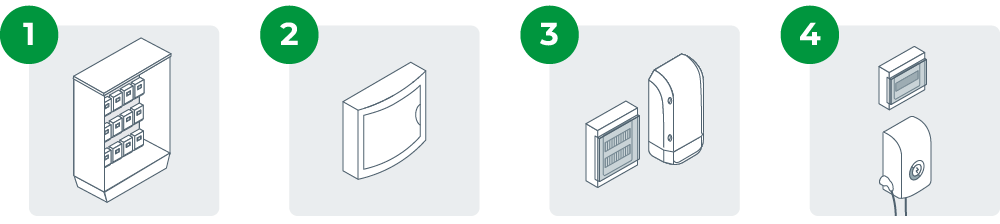
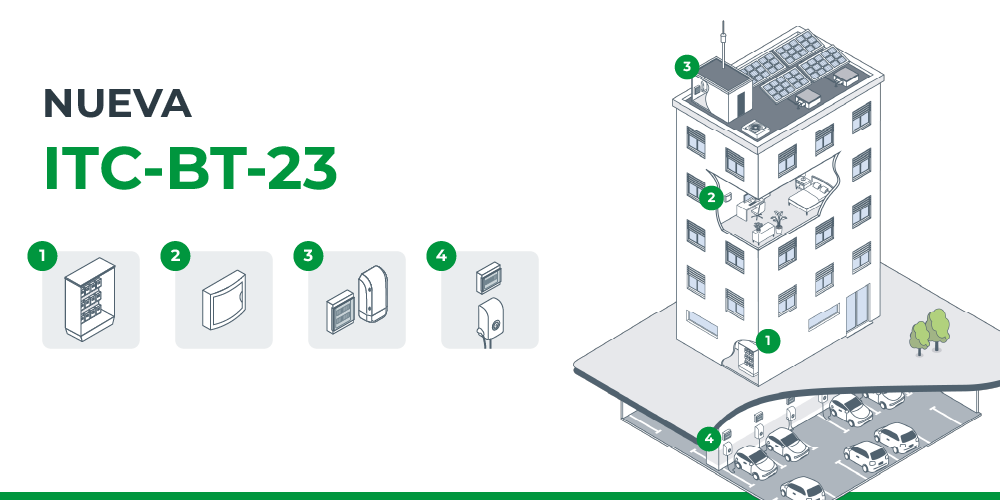
Once the obligation is clear, the important question is how to implement it correctly at each point of the installation. Below, we guide you through the four scenarios that installers will commonly encounter and the right solution for each one.
1
Meter centralisation panel – Type 1 SPD
The first level of protection starts here. The standard requires a Type 1 SPD to be installed upstream of the meter, in the meter centralisation panel, in accordance with ITC-BT-12.
The Type 1 SPD is designed to absorb the highest-energy impulse currents, such as those associated with direct or indirect atmospheric discharges on the network. Its correct installation at this point is what allows the rest of the protection chain, Type 2 in the distribution board and Type 3 at sensitive equipment, to operate effectively.
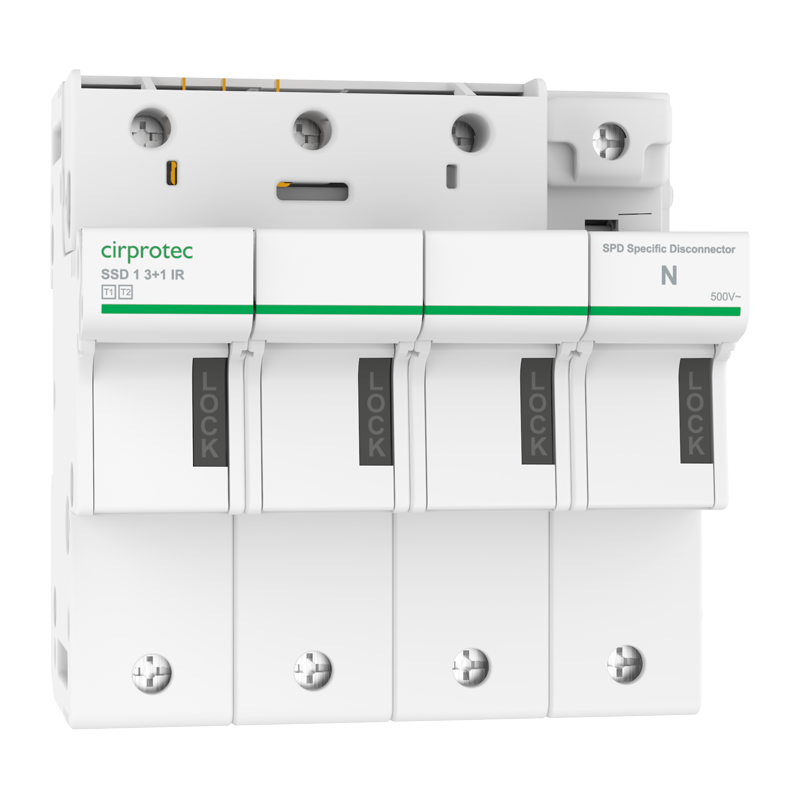
Cirprotec’s solution for this point is the EGARA 1 LF and EGARA 1H LF range, Type 1+2 protectors with LCF technology, leakage-current-free, available with impulse currents of 12.5 kA and 25 kA respectively, in a compact 4-module format and compatible with TT, TNS and TNC networks. They are installed together with the specific SSD 1 and SSD 1H disconnector respectively, designed and tested with the EGARA range, which simplifies back-up protection sizing and provides complete diagnostics with an end-of-life indicator.
2
Main control and protection board – POP + Type 2 SPD or Type 1+2 SPD
In the main distribution board, the requirement is twofold: protection against permanent overvoltages (POP) and transient overvoltages (SPD). Here, the type of solution depends on what is installed upstream:
If there is a Type 1 SPD in the meter centralisation panel → POP + Type 2 SPD
Cirprotec’s solution is V-CHECK MINI, a pre-wired combined POP + Type 2 SPD with main circuit breaker, which complies with the UNE-EN IEC 63052 standard, includes a test button and active protection LED indicator, and is available in models from 10 A to 63 A. DEKRA- and AENOR-certified, it is the most compact solution for the home distribution board.
If it is not possible to install a Type 1 SPD upstream of the meter → POP + Type 1+2 SPD
In this case, all protection must be concentrated in the main distribution board. The solution is V-CHECK MP T12, a combined POP + Type 1+2 SPD with main circuit breaker, with a lightning impulse current (10/350 µs) of 12.5 kA, compliance with the UNE-EN IEC 63052 standard and also available in models from 10 A to 63 A.
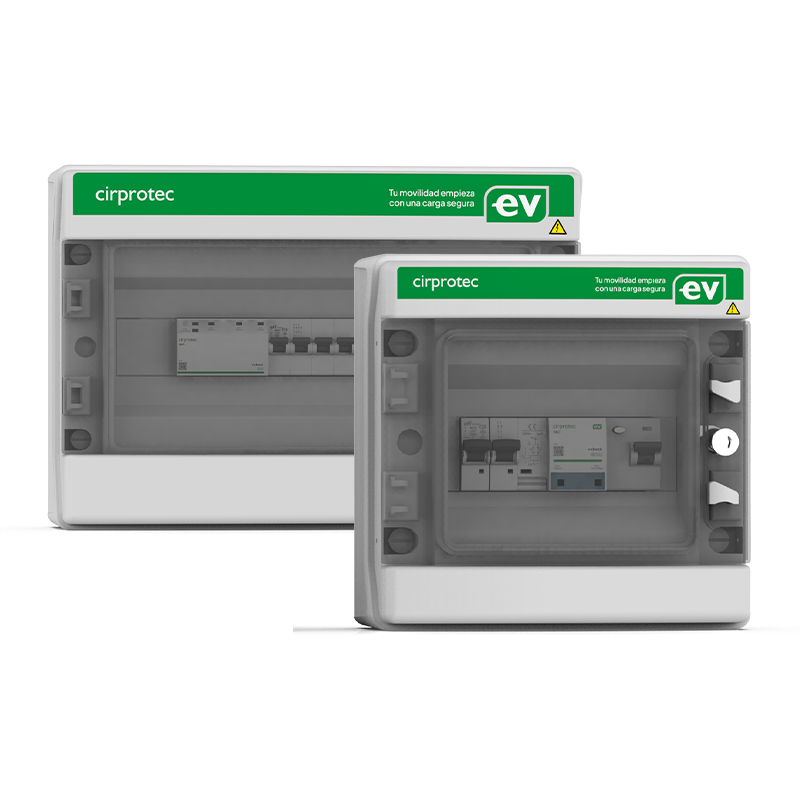
Electric vehicle charging – POP + Type 2 SPD
Photovoltaic generation – Type 1+2 SPD and Type 2 SPD
DC side
Between the photovoltaic generator and the inverter, ITC-BT-53 establishes the need to incorporate suitable surge protection to protect both the inverter and the rest of the installation equipment. For this point, the solution is the EGARA PV and EGARA 5PV range: Type 1+2 and Type 2 protectors for photovoltaic DC installations, with voltages of up to 1,500 Vdc, IEC and UL multi-certified range, and no need for an upstream fuse.AC side
At the inverter output, the solution is EGARA 2, a Type 2 protector for AC photovoltaic installations, with a maximum discharge current of 50 kA (8/20 µs), IEC and UL multi-certified, and available for TT, TNC and TNS networks in the most common voltage ranges: 230/400 V and 400/690 V.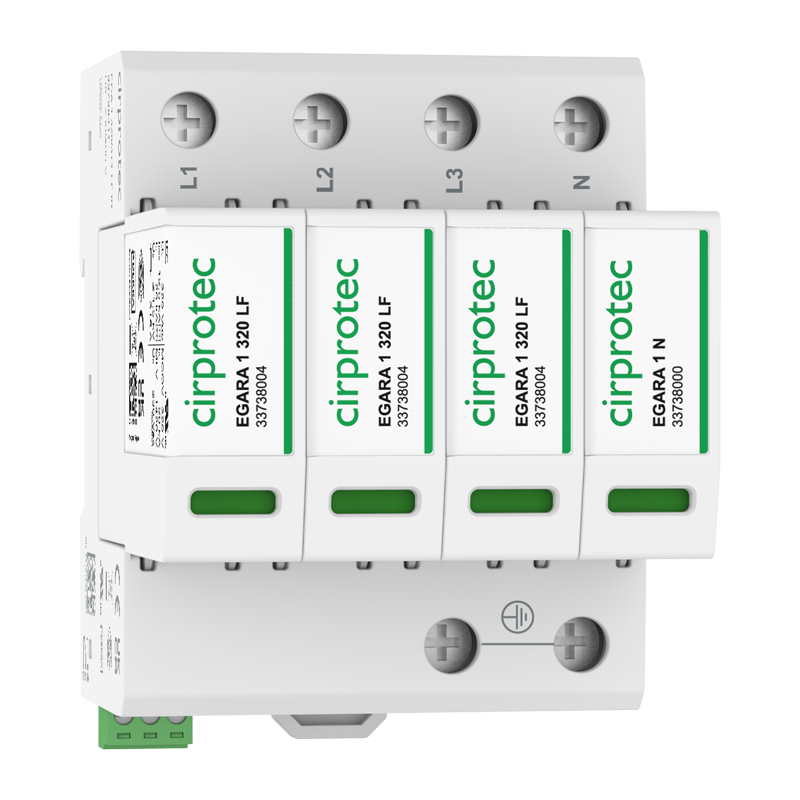
EGARA 1 LF
SPD T1+2
2
Main protection board
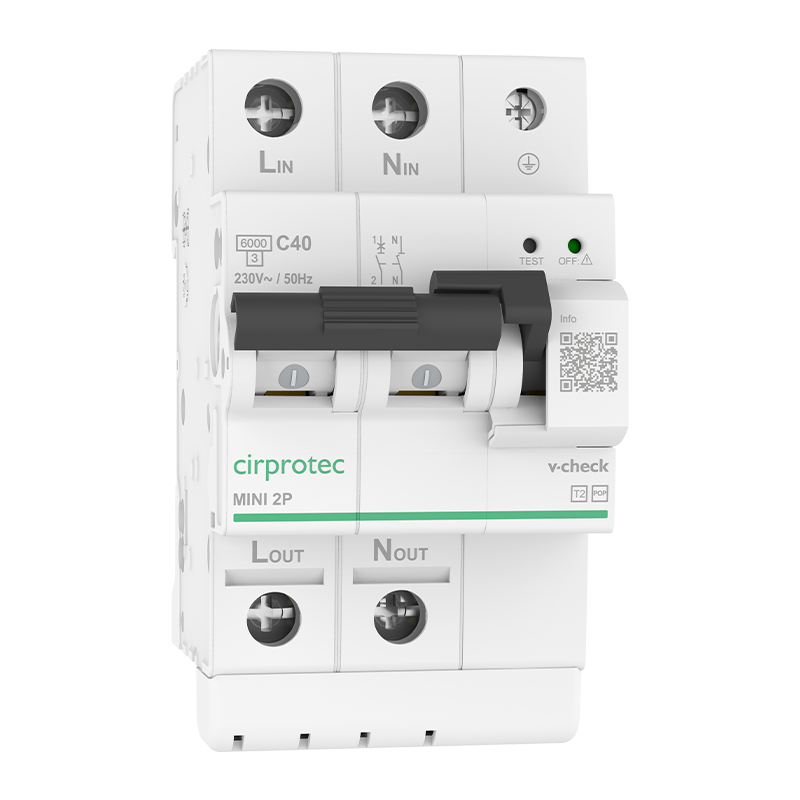
V-CHECK MINI
POP + T2 SPD
3
Renewable generation
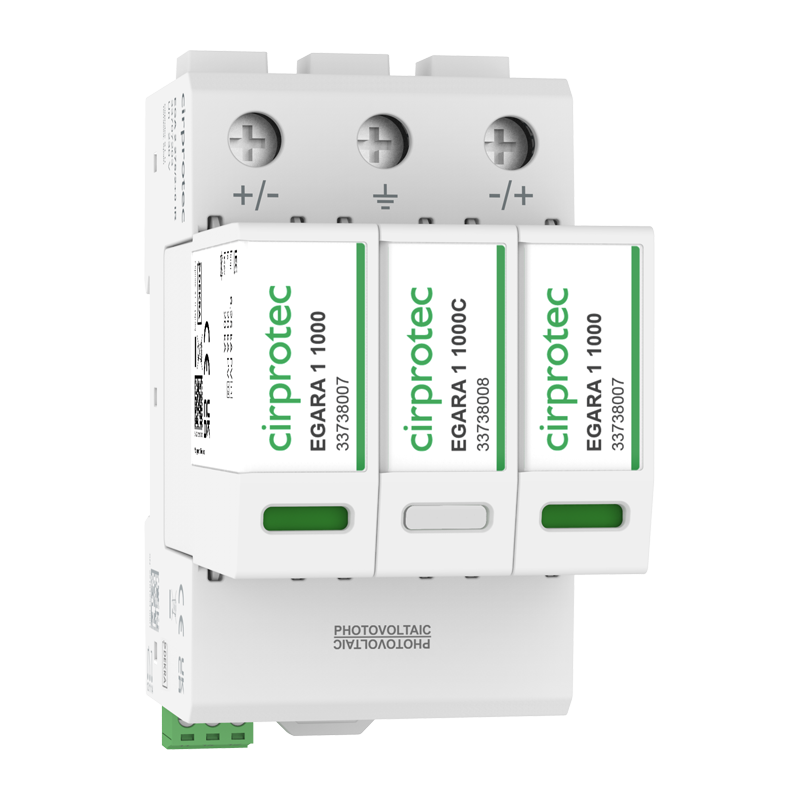
EGARA 1 PV
SPD T1+2 or SPD T2
How to choose correctly: the importance of certification
The mandatory nature of the new ITC-BT-23 has led to a wider range of products on the market. Not all of them offer the same guarantees, and the responsibility for specifying the right solution lies with the person who signs the electrical certificate.
CE marking alone is not enough. In many cases, it is a manufacturer’s self-declaration without supporting tests. When specifying a protector, it is advisable to require tests in accordance with the UNE-EN IEC 63052 or UNE-EN IEC 61643-11 standards, or certification by an accredited independent body such as DEKRA or AENOR, which involves external verification of regulatory compliance.
Choosing correctly is not just a technical matter: it is a matter of professional responsibility. Learn more here.
Conclusión
The new ITC-BT-23 is not a threat: it is an opportunity for installers who do things properly. It clarifies obligations, standardises the level of protection across the installed base and gives professionals solid arguments to specify correctly for any client or developer.
Cirprotec offers a complete range of solutions specifically designed to address each point of the installation according to the requirements of the standard: from the meter centralisation panel to the home distribution board, including EV charging and photovoltaic generation.
Do you have questions about which solution to use in your installation?